import { Image } from ‘astro:assets’;
Every 100 milliseconds your checkout takes to load costs you money. That is not a metaphor. Shopify’s own internal data shows that every 100ms improvement in checkout load speed yields 1.55% more conversions on average. For a store doing $500,000 a year, shaving half a second off your checkout could mean an extra $38,000 in annual revenue.
Yet most Shopify merchants have no idea how fast their checkout actually loads. They obsess over homepage speed, product page images, and theme performance scores, while the single most revenue-critical page on their entire store goes unmeasured and unoptimized.
This guide breaks down the checkout speed metrics that actually matter, reveals the benchmarks you should be hitting, exposes the most common causes of checkout slowdowns, and gives you a clear action plan for fixing them.
Why Checkout Speed Matters More Than Any Other Page
Your homepage is a billboard. Your product pages are a sales pitch. But your checkout page is where the transaction actually happens. A slow checkout does not just annoy customers. It actively kills conversions at the exact moment a buyer has already decided to purchase.
The Hard Numbers on Speed and Revenue
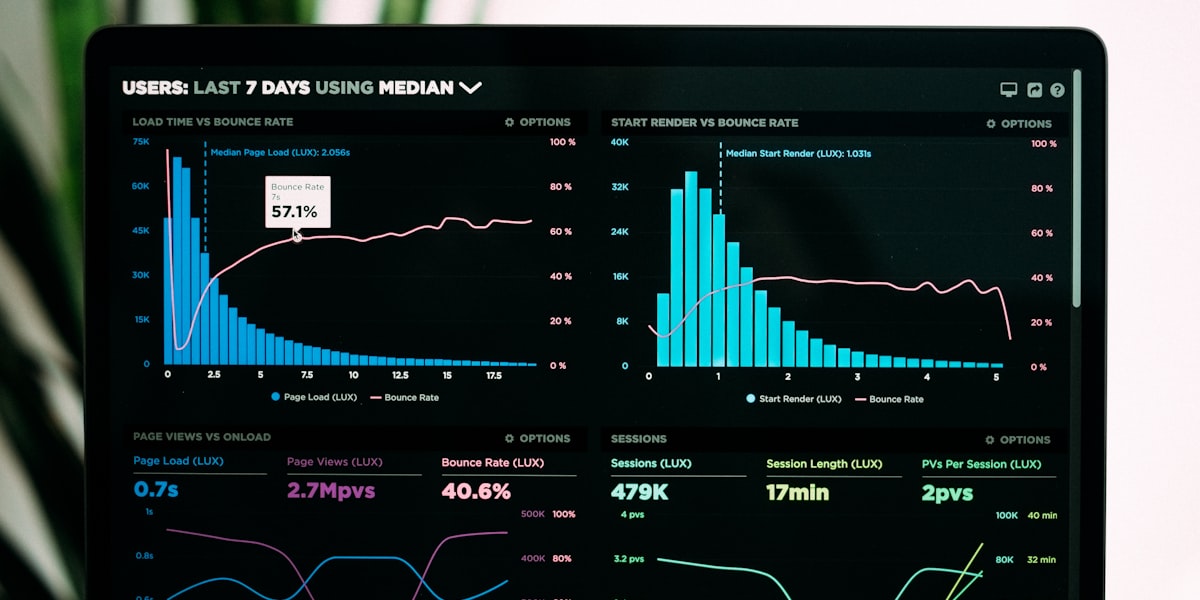
Research consistently shows a steep relationship between load time and conversion rates:
- A 1-second delay in page load time results in a 7% reduction in conversions
- HubSpot research found conversion rates drop by 4.42% for every additional second of delay between 0 and 5 seconds
- Pages loading in 1 second see roughly 40% conversion rates, dropping to 34% at 2 seconds and 29% at 3 seconds
- Amazon discovered that every 100ms of added latency reduced sales by 1%
- Walmart found that a 1-second speed reduction meant 2% more conversions
These numbers compound dramatically at checkout. A customer browsing your collection page might tolerate a slightly slow load. But a customer who has already added items to their cart, entered their shipping address, and is about to enter their credit card? That person has zero patience for a laggy experience.
The Mobile Factor
The speed problem gets significantly worse on mobile, which now accounts for the majority of ecommerce traffic:
- Mobile cart abandonment rates sit between 80% and 85%, compared to 66-73% on desktop
- 64% of mobile shoppers will abandon a cart specifically because the site was too slow
- 53% of mobile visits are abandoned if pages take more than 3 seconds to load
- A 1-second improvement in mobile checkout speed can boost conversions by 12% or more
With mobile purchases expected to surpass 60% of all retail transactions by 2026, a checkout that performs well on desktop but poorly on mobile is actively losing money for most stores.

The Benchmarks: What “Fast Enough” Actually Means
So what should you be aiming for? There are two layers of benchmarks that matter: general load time targets and Google’s Core Web Vitals.
Load Time Targets
- Under 2 seconds: This is the gold standard. Google recommends ecommerce pages load within 2 seconds, and the highest conversion rates (averaging 3.05%) occur in this window
- 2 to 3 seconds: Acceptable but not ideal. You are leaving money on the table but not hemorrhaging conversions
- 3 to 4 seconds: Problem territory. Sessions that exceed 4 seconds account for 58% of all bounces
- Over 4 seconds: Critical. 63% of shoppers will bounce if your site takes longer than 4 seconds to load
For context, the average desktop ecommerce load time is 2.5 seconds while mobile averages a much slower 8.6 seconds. If your checkout loads in under 2 seconds on both desktop and mobile, you are already ahead of most of your competition.
Core Web Vitals Thresholds
Google’s Core Web Vitals directly affect your search rankings and provide a standardized way to measure user experience:
LCP (Largest Contentful Paint) measures how quickly the main content of your page becomes visible:
- Good: Under 2.5 seconds
- Needs improvement: 2.5 to 4 seconds
- Poor: Over 4 seconds
INP (Interaction to Next Paint) replaced First Input Delay in March 2024 and measures how quickly your page responds when a customer interacts with it (clicking buttons, filling forms):
- Good: Under 200 milliseconds
- Needs improvement: 200 to 500 milliseconds
- Poor: Over 500 milliseconds
CLS (Cumulative Layout Shift) measures visual stability. When checkout elements jump around as the page loads, customers lose trust and sometimes click the wrong button:
- Good: Under 0.1
- Needs improvement: 0.1 to 0.25
- Poor: Over 0.25
Only 62% of mobile pages currently achieve a good LCP score, which means nearly 4 in 10 mobile checkout experiences are slower than they should be.
What Is Actually Slowing Down Your Checkout
Understanding benchmarks is one thing. Knowing what drags your checkout below those benchmarks is where you can take action. Here are the most common culprits, ranked by impact.
Third-Party App Scripts: The Biggest Offender
This is the single largest source of checkout slowdowns on Shopify, and it is not even close:
- Third-party scripts account for 75% of page load time on the average Shopify store
- Apps cause approximately 70% of all performance issues, not your theme code
- The average Shopify store has 15 to 20 apps installed, with 5 to 10 injecting frontend scripts
- Each app can inject anywhere from 100KB to 500KB of JavaScript that blocks rendering
A real-world audit found that removing just three apps — a back-in-stock notifier (340KB), a currency converter (220KB), and a loyalty widget (480KB) — improved LCP by 1.9 seconds combined. That is nearly two full seconds of unnecessary delay from three apps that had nothing to do with the checkout process but were loading their scripts on every page anyway.
Ghost Code from Uninstalled Apps
Here is something most merchants do not realize: when you uninstall a Shopify app, it does not always clean up after itself. Orphaned JavaScript snippets, commonly called “ghost code,” can remain in your theme and continue executing on every page load indefinitely.
If you have installed and uninstalled multiple apps over the lifetime of your store (and most merchants have), there is a good chance you have invisible code fragments silently adding to your load times right now.
Too Many Form Fields
The Baymard Institute found that the average checkout contains 14.88 form fields, which is more than double the 6 to 8 fields actually necessary to complete a purchase. Every unnecessary field adds friction, and completion rates drop 4 to 6% for every field beyond the eighth.
22% of shoppers abandon checkout specifically because the process feels “too long or complicated.” Simplifying your form fields is one of the highest-ROI checkout speed improvements you can make.

Payment Gateway Latency
Each payment method you offer at checkout requires a connection to an external service. If a payment gateway is slow to respond, your checkout page waits. Most merchants never measure individual gateway response times, but the difference between a fast and slow gateway can add 500ms to 2 seconds to your checkout experience.
Checkout Customization Done Wrong
Customizing your checkout — hiding irrelevant payment methods, showing conditional shipping options, validating cart contents — is essential for conversion optimization. But the way those customizations are implemented matters enormously.
Legacy checkout customization methods that rely on injected JavaScript can add significant overhead. A poorly coded upsell widget, a JavaScript-heavy payment method toggle, or a client-side validation script can each add hundreds of milliseconds to your checkout load time.
The good news is that Shopify’s modern architecture offers a much better path forward.
Shopify’s Checkout Extensibility: The Performance Architecture
Shopify fully deprecated the old checkout.liquid customization system in August 2024, replacing it with Checkout Extensibility. This is not just a naming change. It represents a fundamental shift in how checkout customizations affect performance.
How the New System Works
The old system allowed apps to inject arbitrary JavaScript directly into the checkout page. Every script had to be downloaded, parsed, and executed by the customer’s browser before the checkout was fully functional.
The new Checkout Extensibility framework and Shopify Functions operate server-side. This means:
- Checkout rules and customizations execute on Shopify’s servers, not in the customer’s browser
- Zero client-side JavaScript is added for server-side logic
- The checkout page only needs to render the final result, not run the computation
- Over 400 checkout apps have already migrated to this framework
For merchants, this means you can have sophisticated checkout customization — conditional payment methods, cart validation rules, dynamic shipping options — without the speed tax that legacy apps imposed.
Shop Pay: The Speed Champion
If you are not using Shop Pay, you are leaving both speed and money on the table:
- Shop Pay increases checkout speed by 4x compared to regular checkout
- It lifts conversion by up to 50% versus guest checkout
- It outpaces all other accelerated checkouts by at least 10%
- Even just having Shop Pay available (without customers using it) increases lower-funnel conversions by 5%
Shop Pay works because it eliminates the slowest parts of checkout: form filling. Returning customers have their information pre-loaded, reducing what would be a 14-field checkout to a single confirmation click.
One-Page vs Multi-Page Checkout
Shopify’s shift to one-page checkout has measurable performance benefits:
- One-page checkout converts approximately 7.5% better overall
- For returning customers on desktop, the lift can be even higher
- Multi-step checkout still performs better for first-time mobile buyers with high cart values
The key insight is that fewer page loads means fewer opportunities for slowdowns to compound. A three-page checkout with a 200ms delay per page adds 600ms of cumulative friction.

How to Measure Your Checkout Speed
You cannot optimize what you do not measure. Here is how to get actual data on your checkout performance.
Google PageSpeed Insights
Run your checkout URL through PageSpeed Insights to get Core Web Vitals scores. Pay special attention to:
- LCP on mobile (your most important metric)
- INP (are interactions responsive?)
- Total Blocking Time (how long is JavaScript blocking the main thread?)
Chrome DevTools Performance Tab
For a deeper dive, use Chrome DevTools:
- Open your checkout page in Chrome
- Press F12 and go to the Performance tab
- Click Record and complete a checkout flow
- Look for long JavaScript execution blocks (these are your bottlenecks)
- Check the Network tab to see which third-party scripts are loading and how large they are
Real User Monitoring
Synthetic tests (like PageSpeed Insights) measure speed under ideal conditions. Real User Monitoring captures what actual customers experience across different devices, connection speeds, and locations. Shopify’s built-in analytics include some speed data, or you can use tools like Google Analytics 4 to track page timing for your checkout.
The App Audit
Run this test: disable all third-party apps temporarily and measure your checkout speed. Then re-enable them one at a time, measuring after each. You will quickly identify which apps are the biggest performance drains.
The Optimization Playbook: Fixing Checkout Speed
Here is a prioritized action plan based on impact and effort.
Step 1: Audit and Remove Unused Apps
Start here because it is free and has the biggest impact:
- Go through every installed app and ask: “Is this actively driving revenue?”
- Uninstall anything that is not essential
- Check your theme code for ghost scripts from previously uninstalled apps
- Schedule quarterly app audits to prevent bloat from creeping back
Step 2: Prioritize Server-Side Apps
When choosing apps for checkout customization, prioritize those built on Shopify’s modern Checkout Extensibility framework using Shopify Functions. These execute server-side and add zero client-side JavaScript.
Kedra Checkout Rules is built on this modern architecture, letting you create sophisticated checkout logic — hiding or showing payment methods based on cart value, customer tags, product type, shipping destination, and dozens of other conditions — without adding any script overhead to your checkout. Your customers get a cleaner, faster, more relevant checkout experience, and your speed metrics stay exactly where they should be.
This matters because every checkout customization app that still injects client-side scripts is directly competing with your conversion rate. The fastest checkout rule is one your customer’s browser never has to process.
Step 3: Reduce Form Fields
Audit your checkout form and remove every field that is not strictly necessary:
- Do you need a company name field for B2C orders? Hide it
- Are you collecting a phone number when you do not use SMS notifications? Remove it
- Is your address form requiring separate fields for apartment, suite, and unit? Combine them
Target 6 to 8 total fields. If you need additional information from specific customer segments (like purchase order numbers from B2B buyers), use conditional fields that only appear when relevant rather than showing them to everyone.
With Kedra Checkout Rules, you can set up conditional validation that only triggers for the orders that need it, keeping the default checkout clean and fast for your typical customer.
Step 4: Optimize Payment Method Display
Showing every payment method to every customer is a speed and conversion killer:
- More payment options means more gateway connections to initialize
- Decision fatigue from too many choices slows customers down
- Irrelevant options (like COD for international customers) create confusion
Instead, display only the payment methods relevant to each customer based on their location, cart value, and purchase history. This reduces both the technical load time and the psychological load time.
Step 5: Enable and Promote Shop Pay
If you have not enabled Shop Pay, do it today. The 4x speed improvement and up to 50% conversion lift make it the single highest-impact speed optimization available. Make sure Shop Pay appears as the primary checkout option, especially on mobile.
Step 6: Optimize Images and Assets
For your checkout page specifically:
- Ensure your logo is properly sized (not a 2000px image scaled down to 100px)
- Use WebP format for any images that appear at checkout
- Lazy-load any trust badges or secondary images
- Minimize or eliminate animations at checkout
Step 7: Monitor Continuously
Checkout speed is not a set-it-and-forget-it metric. New app installs, theme updates, and Shopify platform changes can all affect performance. Set up regular monitoring:
- Run PageSpeed Insights on your checkout URL monthly
- Track real user checkout completion times in your analytics
- Set alerts for significant speed regressions
- Re-audit your app stack quarterly

The Checkout Complexity Paradox
Here is the tension every Shopify merchant faces: you need checkout customization to maximize conversions, but customization adds complexity, and complexity can slow things down.
The solution is not to avoid customization. A one-size-fits-all checkout that shows every payment method to every customer in every country is technically fast but converts poorly because it is not relevant.
The solution is to customize smartly:
- Use server-side tools that do not add client-side weight
- Show fewer, more relevant options rather than more options
- Validate conditionally rather than universally
- Build rules that simplify the checkout experience instead of complicating it
When a customer in Germany sees only the payment methods popular in Germany, and a wholesale buyer sees the B2B terms they expect, and a mobile shopper gets a streamlined experience with only the essential fields — that is customization that makes the checkout both faster and more effective.
This is exactly the kind of conditional logic that Kedra Checkout Rules enables. You define the rules, and Shopify’s servers handle the logic before the checkout page ever reaches your customer’s browser. No extra scripts. No added load time. Just a cleaner, faster, more relevant checkout.
What “Fast Enough” Really Means
To bring it back to the original question: how fast is fast enough?
The technical answer: Under 2 seconds on both desktop and mobile, with Core Web Vitals scores in the green (LCP under 2.5s, INP under 200ms, CLS under 0.1).
The practical answer: Fast enough that speed is never the reason a customer abandons your checkout. If you are under 2 seconds and your abandonment issues are about pricing, trust, or product fit rather than performance, your speed is where it needs to be.
The competitive answer: Faster than your competitors. In a market where the average mobile ecommerce experience takes 8.6 seconds to load, being under 2 seconds is not just good. It is a genuine competitive advantage.
The merchants who get this right — who audit their apps, choose server-side tools, streamline their forms, and monitor their metrics — consistently see 15 to 35% conversion rate increases within 60 to 90 days. On a typical Shopify store, that is the difference between struggling and scaling.
Your checkout speed is not a vanity metric. It is a direct multiplier on every dollar you spend on marketing, every product you list, and every customer who makes it to your cart. Measure it, benchmark it, and optimize it. Your revenue will follow.
Kedra Team
Expert insights on Shopify development and e-commerce growth strategies.