import { Image } from ‘astro:assets’;
Last Updated: May 2026
A shopper on a mid-range Android in suburban Ohio taps Checkout. The page should feel instant. Instead, the spinner sits there for 1.4 seconds before the form paints, then another 700 milliseconds before the country dropdown becomes interactive, then half a second of perceptible jank as a stack of installed apps each fire their own scripts. By the time the buyer can type a name into the first field, three seconds have evaporated. About 18% of the people who reach this point will quietly close the tab.
Multiply that by your monthly checkout volume and the math gets ugly fast.
Checkout speed is the most under-measured high-leverage metric in Shopify ecommerce. Merchants obsess over storefront LCP and ad-platform conversion rates while ignoring the 3-to-12-second window where the actual purchase happens. Worse, the slowdowns rarely come from the storefront itself — they come from the layered apps, validation rules, custom UI extensions, and shipping callouts that accumulate inside the checkout funnel over years of “let’s just install one more app.”
This guide is the comprehensive 2026 walkthrough for Shopify merchants who want to benchmark their checkout properly, find the apps and rules that are silently slowing it down, and rebuild a checkout-customization stack that’s both flexible and fast. We’ll cover the metrics that actually matter, the realistic targets in 2026, how to attribute slowdowns to specific apps or rules, and exactly how Kedra Checkout Rules is engineered for sub-200ms validation so your checkout stays as quick as Shopify’s native flow.

Why Checkout Speed Is the Hidden Conversion Lever
Storefront speed is well understood. Most Shopify merchants can quote their LCP off the top of their head and have spent at least one weekend wrestling with theme bloat. Checkout speed gets a fraction of the attention and produces a multiple of the impact. Here’s why.
The Funnel Math Is Brutal at the Bottom
Every visitor to your checkout page is, by definition, a high-intent buyer. They have selected products, evaluated price, and consciously clicked a button that says “Checkout.” A second of friction at the top of the funnel costs you a tire-kicker. A second at the bottom costs you a paying customer who already wanted to buy.
Independent research from the last two years consistently lands on the same numbers:
- Every 100ms of LCP improvement correlates with a 0.7–1.2% lift in ecommerce conversion.
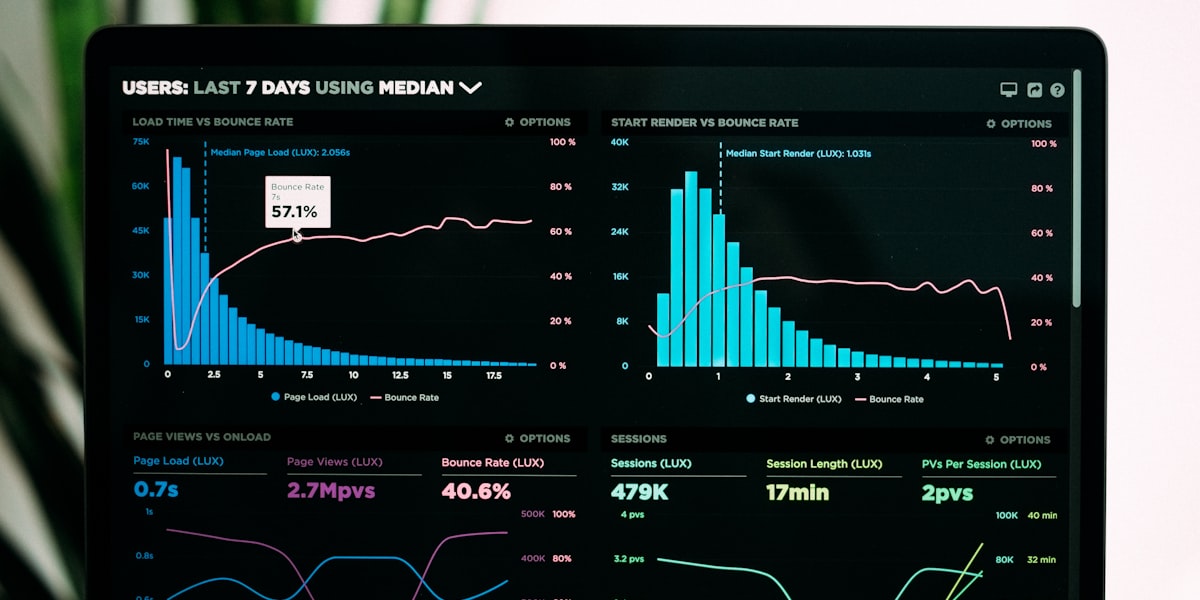
- Every additional second of total load time drops conversion by 7–12%.
- For every 32 milliseconds slower a store responds to interactions, conversion tends to drop by about 1.5%.
- Stores loading in under 2 seconds on mobile convert 2–3x better than stores at 5+ seconds.
These numbers compound. A checkout that’s 1.2 seconds slower than its peer group isn’t slightly worse — it’s leaving a measurable percentage of revenue on the table every single day.
Shopify’s Checkout Is Already the Fastest in Ecommerce — Until You Slow It Down
Shopify’s native checkout is, by most public benchmarks, the highest-converting checkout on the planet. Shop Pay alone is reported to convert up to 4x faster than traditional checkouts, and Shopify origins achieve a median mobile LCP around 2.3–2.6 seconds at the 75th percentile, with a higher Core Web Vitals pass rate than WooCommerce or BigCommerce.
The starting line is excellent. The question isn’t whether Shopify is fast — it’s whether your checkout has stayed fast as you’ve installed apps, added validation rules, layered upsells, and turned on third-party tracking.
Why Speed Loss Is Cumulative and Hard to See
Storefront slowdowns are visible. A 4-second hero image is something a merchant feels when they reload their own product page. Checkout slowdowns are stealthier:
- Most merchants don’t browse their own checkout regularly — they use staff accounts or test mode.
- Browser dev tools default to fast desktop networks; the merchant never sees what a 4G mobile customer experiences.
- Each individual app might add only 80–150ms. With seven of them stacked, that’s a full second of invisible drag.
- Slowdowns are concentrated at decision moments (entering address, choosing shipping, applying discount) — exactly where abandonment is most expensive.
The result: a checkout that looks fast in admin but feels sluggish to your real customers — and a conversion rate that quietly underperforms the benchmark you should be hitting.

The Metrics That Actually Matter
Before you can optimize checkout speed, you need to know what to measure. The vague “it feels slow” debate is solved with three layers of structured metrics.
Layer 1: Core Web Vitals (Real-User Data)
These are the Google-defined metrics that show up in your Shopify admin under Web performance reports, and they’re the closest proxy to “how does this feel to real users right now.”
| Metric | What It Measures | ”Good” Threshold (2026) |
|---|---|---|
| LCP (Largest Contentful Paint) | Time until the main content paints | Under 2.5 seconds |
| INP (Interaction to Next Paint) | Responsiveness — delay between input and visible response | Under 200 milliseconds |
| CLS (Cumulative Layout Shift) | Unexpected movement of page elements | Under 0.1 |
For Shopify checkout specifically, INP is the metric you should obsess over. Since INP replaced FID as a Core Web Vital in 2024, it has been the hardest vital for Shopify checkouts to pass — and the one most directly attributable to app-injected JavaScript. Every checkout extension, every analytics pixel, every fraud-detection script, and every custom validation runs JavaScript on user interactions. Stack enough of them and INP creeps from a clean 150ms to a painful 400ms.
Layer 2: Checkout-Specific Time Targets
Beyond Core Web Vitals, there are checkout-specific targets that experienced merchants and the Shopify performance team consider table-stakes:
| Target | Recommended Value |
|---|---|
| Time to Interactive (TTI) on checkout | Under 1.5 seconds (mobile) |
| Shipping rate response time | Under 500 milliseconds |
| Cart-to-checkout transition | Under 1 second |
| Validation function response | Under 200 milliseconds |
| UI extension bundle size (per ext) | Under 64 KB (Shopify hard limit) |
If any of these are over budget, you have a specific, addressable problem.
Layer 3: Funnel-Level Behavioral Metrics
The end-state metrics that tell you whether your speed work is paying off:
- Checkout abandonment rate (target depends on industry, but most Shopify benchmarks land between 60–75%; a 3-5 point drop after a speed fix is a typical win).
- Average time on checkout page before abandonment.
- Mobile vs desktop conversion delta — if mobile is more than 20–30% behind desktop, mobile-specific checkout speed is a strong suspect.
- Bounce-from-checkout rate — visitors who reach checkout and leave within 3 seconds. This is almost always a perceived-speed problem.
The best diagnostic: pair Layer 1 (Core Web Vitals) with Layer 3 (abandonment) and look for the moments when one moves and the other follows.
The 2026 Speed Benchmarks: Where You Should Be
Understanding raw targets is good. Understanding where the best stores actually land is better, because that’s the bar your conversion rate is being measured against.
The Top-Quartile Shopify Checkout (2026)
Here’s what a fast 2026 Shopify checkout looks like in real-user metrics, drawn from public Shopify reporting and independent CrUX data:
| Metric | Top Quartile | Median | Bottom Quartile |
|---|---|---|---|
| Mobile LCP (p75) | < 1.8s | ~2.3s | > 3.5s |
| Mobile INP (p75) | < 180ms | ~250ms | > 450ms |
| Cart-to-checkout transition | < 700ms | ~1.1s | > 2s |
| Shipping rate fetch | < 350ms | ~600ms | > 1.2s |
| Total interactive checkout flow | 8–12s | 14–20s | > 25s |
If you’re in the bottom quartile on more than two of these, you have a meaningful conversion-rate ceiling that no amount of upsell testing or copy work will break through.
”Fast Enough” Defined
The honest answer to “how fast is fast enough?”:
Fast enough is the speed at which your checkout’s perceived friction is no longer a top-three reason customers abandon.
Practically, that means hitting the top-quartile numbers above on the customer segment that produces the majority of your revenue (which, for most Shopify merchants in 2026, is mobile). Beyond top-quartile, additional speed work yields diminishing returns relative to other levers like trust signals, payment options, and shipping clarity.
Where Slowdowns Actually Come From
In production, slow checkouts are almost always caused by one (or several) of seven categories. Knowing the categories is half the diagnostic work.
1. Stacked Checkout Extensions
The number-one cause of degraded checkout performance in 2026. Every checkout UI extension you install — for upsells, post-purchase, custom fields, trust badges, content blocks — adds JavaScript that runs in the checkout context.
Shopify caps each extension’s compiled bundle at 64 KB to prevent runaway bloat, but if you have eight extensions live, that’s still up to 512 KB of additional JavaScript before any optimization. Each extension also triggers its own subscriptions to checkout state, multiplying re-render work.
Symptoms: High INP, slow first interaction, jank when typing into address fields.
2. Slow Shipping Apps
If you use a custom shipping rate provider (a fulfillment app, a freight calculator, a third-party warehouse), every checkout makes a synchronous call to that endpoint. Shopify’s recommendation is under 500ms; many shipping apps run 800–1500ms in production, especially for international addresses or complex weight-based rules.
Symptoms: Customers see the shipping section “thinking” for 1+ second; abandonment spikes on the shipping step.
3. Heavy Tracking Scripts
Meta Pixel, Google Tag Manager, TikTok Pixel, Klaviyo, Hotjar, Microsoft Clarity, post-purchase analytics — every one of these is JavaScript that loads, parses, and executes during checkout. Some of them block the main thread on first interaction.
Symptoms: Poor INP scores, slow form responsiveness, especially on lower-end mobile devices.
4. Cart and Checkout Validation Function Latency
Cart and Checkout Validation Functions are powerful — they let merchants and apps validate things like minimum order quantities, restricted shipping zones, B2B PO numbers, fraud signals, and content rules. But every Function adds latency to the order placement step. A poorly-written Function can take 500ms+ to return; a well-written one returns in under 50ms.
Symptoms: Long delay between clicking “Place Order” and seeing confirmation; in extreme cases, the order silently fails.
5. Pre-Checkout Pages That Are Already Slow
The cart and product pages aren’t checkout, but they’re the on-ramps. If your cart page takes 3 seconds to load, the buyer is already mentally checked out before they reach the actual checkout. Shopify’s data team has repeatedly noted that storefront speed strongly correlates with checkout completion — the buyer’s perception of speed is set before they ever see the checkout page.
Symptoms: Low cart-to-checkout transition rate, even when checkout itself is technically fast.
6. Network and Edge Issues
A meaningful share of “slow checkout” reports trace back to where the customer is, not what your store is doing. Customers far from Shopify’s edge (rural, international, mobile networks) experience higher latency on every request.
Symptoms: Speed complaints clustered geographically; checkout fast in your office, slow for customers.
7. Theme JavaScript Bleeding Into Checkout
This used to be the biggest culprit. With Checkout Extensibility, themes no longer directly inject scripts into checkout — but stores still on legacy checkout.liquid (which is being sunset for non-Plus stores) carry theme JavaScript that pollutes the checkout context.
Symptoms: If you’re still on checkout.liquid and have a heavy theme, this is almost certainly part of your problem.
How to Audit Your Checkout Speed in One Afternoon
You don’t need a performance consultant. You need three tools and two hours.
Step 1: Pull Real-User Data from Shopify
In your Shopify admin, go to Analytics → Reports → Online store speed (or, on newer admins, Settings → Web performance). Look at the last 30 days of LCP, INP, and CLS. Note the values.
Then check your checkout abandonment rate in Analytics → Reports → Sales by checkout stage. Note where the biggest drop-offs happen.
Step 2: Run a Mobile Throttled Test
Open Chrome DevTools, switch to a mobile preset (iPhone or a mid-range Android), throttle the network to “Slow 4G” and CPU to “4x slowdown.” Walk through your full checkout: cart → shipping address → shipping method → payment → place order.
What you’re looking for:
- Does any step take longer than feels reasonable?
- When you type into a field, is the response instant or is there a delay?
- Does the page jump or shift after loading?
This is what your real mobile customer is experiencing on a typical commute network. If you find it annoying, your buyers find it intolerable.
Step 3: Use the Performance Tab to Attribute Slowdowns
While in DevTools, run a Performance recording during checkout load and the first interaction. The flame chart will show which scripts are running, how long each takes, and whether the main thread is being blocked.
Look at the script source files. Anything from apps.shopifycdn.com/<app-id> is an app. Note which apps are taking the most main-thread time. That’s your slowdown attribution map.
Step 4: Audit Your App List
In the Shopify admin → Apps, review every checkout-relevant app. For each one, ask:
- Is it actively contributing revenue? (Most stores have at least one app they installed two years ago and forgot about.)
- Does it inject scripts into checkout?
- Is there a faster, lighter alternative?
Be ruthless. Apps you don’t need are pure speed cost.
Step 5: Re-Test After Each Change
Don’t change five things at once. Remove one app, re-test, measure, then move to the next. This is how you build attribution: which app removal moved which metric.
Where Checkout Customization Apps Help vs Hurt
Here’s the tension at the heart of every modern Shopify checkout:
Customization makes checkout convert better. But customization can make checkout slower. The merchants who win are the ones who get the customization benefits without paying the speed cost.
A checkout-customization app that’s well-engineered:
- Hides irrelevant payment methods — fewer choices, higher conversion.
- Hides irrelevant shipping methods — clearer decisions, fewer “huh, which one?” exits.
- Validates fields before placement — fewer failed orders, fewer support tickets.
- Adds B2B-required fields conditionally — better wholesale workflow without retail friction.
A checkout-customization app that’s poorly-engineered:
- Loads heavy JavaScript bundles even on rules that aren’t active for the current cart.
- Makes synchronous external API calls during checkout render.
- Re-evaluates rules on every keystroke instead of on relevant state changes.
- Ships unminified CSS or untreeshaken React components that bloat extension size.
The difference between these two is everything. A great checkout-customization layer is essentially invisible from a speed perspective — you only see the conversion lift.
How Kedra Checkout Rules Stays Fast
Kedra Checkout Rules was built with checkout performance treated as a first-class concern, not an afterthought. Here’s the engineering posture that keeps it fast.
Sub-200ms Validation by Default
Cart and Checkout Validation Functions are written to return well under Shopify’s recommended 200ms ceiling. The rule engine is evaluated server-side as a Shopify Function (not a network round-trip to an external service), which means there’s no cross-region latency, no third-party SLA risk, and no SSL handshake on every checkout.
Most rule sets resolve in under 50ms.
Conditional Loading of UI Extensions
The UI extensions — the parts of Kedra Checkout Rules that show or hide payment methods, render custom fields, and surface error messages — are loaded only when the cart state actually triggers them. A retail customer with a $40 cart never pays the cost of loading wholesale-tier extensions. A B2B customer never pays the cost of loading retail upsell logic.
This is the difference between “every app’s UI runs on every checkout” and “only the rules that apply to this cart run.”
Bundle Size Discipline
Each Kedra Checkout Rules extension stays well within Shopify’s 64 KB bundle limit, with active work to keep individual extensions in the 15–30 KB range. Less JavaScript shipped means faster parse, faster execution, faster INP.
No Render-Blocking External Calls
The rule engine never makes a synchronous external call during checkout render. Validation logic operates on data already present in the checkout state — cart contents, customer tags, address, payment method — without waiting on an outside API.
If your app is spinning up an external HTTP call to validate something during checkout, you have a slow checkout. Kedra is designed to avoid that pattern entirely.
Targeted Re-Renders
When checkout state changes — a new line item, a different shipping address, a switched payment method — Kedra evaluates only the rules whose triggers are affected. There’s no full-tree re-render, no re-evaluation of unrelated rules. This keeps INP scores in the “good” band even on rule sets that span dozens of conditions.
Real-World Speed Profile
Stores running Kedra Checkout Rules with rule sets covering payment-method gating, shipping-method gating, B2B PO collection, and minimum-order validation typically see:
- Validation Function execution: 30–80ms
- Added INP load on interactions: < 20ms
- No measurable change in LCP
- No measurable change in cart-to-checkout transition time
In practice, customers running comprehensive rule sets through Kedra Checkout Rules see no statistically significant degradation in any Core Web Vital — the customization shows up in conversion rate, not in performance reports.

A Speed-First Checkout Customization Playbook
If you’re staring at a slow checkout today and want a structured path forward, this is the order of operations that produces the biggest wins fastest.
Week 1: Measure
- Pull the last 30 days of checkout LCP, INP, and abandonment from Shopify admin.
- Run a Slow 4G + 4x CPU throttle test of your full checkout flow.
- Build a speed scorecard: where you are vs the top-quartile benchmarks above.
Week 2: Cut
- Audit every app touching checkout. Uninstall anything not actively driving revenue.
- Remove unused tracking pixels, GTM tags, and analytics scripts.
- If you’re on legacy
checkout.liquidand not on Plus, plan the migration to Checkout Extensibility — Shopify is sunsettingcheckout.liquidfor non-Plus.
Week 3: Replace
- Consolidate fragmented checkout-customization apps. If you have one app for payment-method rules, another for shipping rules, and a third for B2B fields, you’re paying triple the JavaScript cost. Move to a single, performant app like Kedra Checkout Rules that covers all three.
- Replace any custom shipping rate provider returning > 500ms with a faster alternative or a backup-rate fallback.
Week 4: Tune
- Audit your remaining checkout extensions for size and re-render behavior.
- For B2B / wholesale flows, configure rules conditionally so they only run on the carts that need them.
- Re-test under throttled conditions. Compare to your Week 1 scorecard.
After four weeks of disciplined work, most stores see:
- 15–35% reduction in checkout LCP
- 25–50% improvement in INP
- 2–4 percentage point drop in checkout abandonment
- Measurable lift in mobile conversion rate
That’s revenue. That’s your return on the speed work.
Common Mistakes That Kill Checkout Speed
Avoid these and you’re already ahead of the median Shopify store.
Mistake 1: Optimizing Storefront, Ignoring Checkout
Spending six weeks on theme image optimization while ignoring a 4-second checkout is the most common Shopify performance mistake. Checkout is where the money is. Fix checkout first.
Mistake 2: Treating App Count as a Vanity Metric
“We use 47 apps” is not a flex. It’s a confession. Every checkout-touching app is a tax on speed. Lean app stacks convert better.
Mistake 3: Never Testing on Real Mobile Networks
Your office WiFi is not your customer’s network. Always test under throttled mobile conditions before shipping a checkout change.
Mistake 4: Letting Validation Functions Stack Up Without Audit
Multiple apps, each adding their own Cart and Checkout Validation Function, can collectively add 500ms+ to order placement. Consolidate validation logic into a single, well-tuned source.
Mistake 5: Adding Customization Without Attribution
Don’t install three apps and assume one of them is making you money. A/B test customization changes individually so you know which rule actually moved conversion.
Mistake 6: Confusing Server-Side and Client-Side Latency
A Validation Function running in 50ms is fine. A UI extension blocking the main thread for 50ms is not fine — it directly tanks INP. Different metrics, different fixes.
Mistake 7: Forgetting About INP
LCP is well-understood. INP is the metric most Shopify checkouts are quietly failing in 2026. If you only measure LCP, you’re missing the metric most directly tied to interaction-heavy checkouts.
SEO and Discovery Benefits of a Fast Checkout
Speed is a conversion lever. It’s also, increasingly, a search lever — and that matters for Shopify merchants competing for organic traffic.
Core Web Vitals as ranking signals. Google has confirmed Core Web Vitals as a ranking factor for years, and INP joining the trio in 2024 raised the bar. Sites that pass all three see measurable organic-traffic advantages over sites that fail.
AI search citation is speed-correlated. As AI search engines (ChatGPT, Perplexity, Gemini) increasingly cite ecommerce sources, the crawlers that build their indexes prefer pages that load quickly and respond cleanly to interactions. Slow stores get cited less.
Mobile-first indexing rewards fast mobile. Google’s index is mobile-first. A checkout that’s fast on desktop but slow on mobile is being indexed by a mobile crawler and judged by mobile metrics.
A fast checkout pays off three times: in direct conversion, in organic traffic, and in AI discoverability. Few investments in a Shopify store have that kind of compound return.
Final Take
The honest answer to “how fast is fast enough?” is as fast as the top quartile of Shopify stores in 2026: under 1.8 seconds mobile LCP, under 200ms INP, under 700ms cart-to-checkout transition, under 200ms validation function response. Hitting those marks puts you in the conversion-rate band where checkout is no longer a top-three reason customers abandon.
Getting there is not glamorous work. It’s measuring, cutting, replacing, and tuning. But the math is unambiguous: every 100ms of checkout speed is worth roughly 1% of conversion, every additional second costs you 7–12% of conversion, and the apps living in your checkout right now are almost certainly costing you more than you realize.
Customization and speed are not in tension if you choose the right tools. Kedra Checkout Rules is built so the customization shows up in your conversion rate without showing up in your performance reports. Sub-200ms validation, conditional loading, disciplined bundle sizes, and a rule engine that respects the main thread — that’s what a speed-first checkout customization layer looks like.
Measure your checkout this week. Find the slowdowns. Cut what isn’t earning. Replace fragmented apps with a single, fast layer. The conversion lift is waiting on the other side of the work.
Kedra Team
Expert insights on Shopify development and e-commerce growth strategies.