import { Image } from ‘astro:assets’;
Last Updated: April 2026
There is a revenue lever on your Shopify store that costs nothing to pull, takes about fifteen minutes to configure, and almost nobody bothers to touch. It is the order in which payment methods appear at checkout.
Most Shopify merchants accept the default. Shopify orders payment methods based on a mix of general popularity and past customer behavior, and the store owner assumes that’s good enough. It isn’t. The position of a payment method at checkout materially changes how many customers pick it — and because different payment methods convert, refund, and dispute at wildly different rates, the option that sits in the top slot has an outsized impact on your revenue.
This guide walks through why payment method order is one of the most undervalued CRO levers in ecommerce, how to identify your store’s highest-converting payment method using the data you already have, and exactly how to reorder checkout using Kedra Checkout Rules so the method that actually makes you money is the one customers see first.

The Hidden Economics of Payment Method Position
Payment method ordering sounds cosmetic. It isn’t. It sits at the intersection of three things that decide whether a cart becomes revenue:
- Position bias. The first option in any list gets selected disproportionately often. This shows up in menus, in search results, and in checkout forms. In ecommerce checkout specifically, merchants who’ve tested ordering report that the top-listed payment method is chosen 20–40% more often than it would be from pure preference alone.
- Decision fatigue. The global cart abandonment rate is 70.22% according to Baymard Institute’s 2026 research. One of the drivers is decision load — customers who hit checkout already have shipping choices, account prompts, marketing opt-ins, and multiple payment options. When the first payment option is one they trust, they pick it and move on. When it isn’t, they pause, they compare, and a meaningful share of them leave.
- Conversion variance between methods. Not every payment method converts equally once selected. Shop Pay routinely reports conversion rates substantially higher than generic credit card checkout because saved details eliminate typing. One-click wallets (Apple Pay, Google Pay, Shop Pay) reduce mobile friction where typing card details is the single biggest drop-off point — digital wallets can increase mobile conversion by 10–30% compared to manual card entry.
When you combine these three effects, the math is blunt. The payment method at the top of your list will get picked more often than any other. If that method has a higher completion rate than alternatives, you earn more revenue with zero change to product, price, or traffic. If that method has a lower completion rate — say, a manual bank transfer or a generic card form when 60% of your traffic is mobile — you’re leaving money on the table every single day.
What “Highest-Converting” Actually Means
Before we can reorder payment methods by conversion, we need to be specific about what “highest-converting” means. It is not the same as “most popular” and it is not the same as “highest AOV.”
There are four metrics worth tracking for every payment method your store accepts:
1. Checkout Completion Rate by Payment Method
This is the percentage of customers who start a transaction with a given payment method and actually complete it. Shop Pay tends to sit near the top here — Shopify’s own data has historically shown checkout completion rates for Shop Pay meaningfully higher than standard credit card checkouts. Apple Pay and Google Pay follow closely on mobile. Manual credit card entry sits in the middle. PayPal varies enormously by category and demographic. Cash on Delivery can look strong at the cart level but very weak at the fulfillment level once you factor in return-to-origin.
2. Post-Order Retention (Refund & Chargeback Rate)
A “completed” checkout is not the same as booked revenue. Some payment methods carry higher downstream costs. PayPal transactions can have higher dispute rates in certain categories. COD orders have refusal rates that vary from 5% to 30%+ depending on region and price point. Buy Now Pay Later options sometimes produce higher returns because the deferred-payment psychology encourages speculative buying.
Your “highest-converting” payment method in a revenue sense is the one with the best combination of completion rate and post-order retention — the one where the dollars stay.
3. Average Order Value
BNPL options like Klarna, Afterpay, and Affirm have been shown to lift average order value by 20–40% for merchants who offer them, because customers can spread payments across installments. Shop Pay Installments produces similar effects. If your store sells higher-ticket products, the payment method with the highest AOV may be your most valuable slot even if its volume is lower.
4. Processing Cost
Different payment methods carry different fees. Shopify Payments via Shop Pay can be cheaper than manual credit card processing in many regions. PayPal fees are often higher. BNPL providers charge 3–6%+ of transaction value. Manual bank transfers are nearly free but have catastrophic conversion. Your “highest-converting” method, from a gross margin perspective, is the one where the net revenue after processing fees is highest.
How to Identify Your Store’s Highest-Converting Payment Method
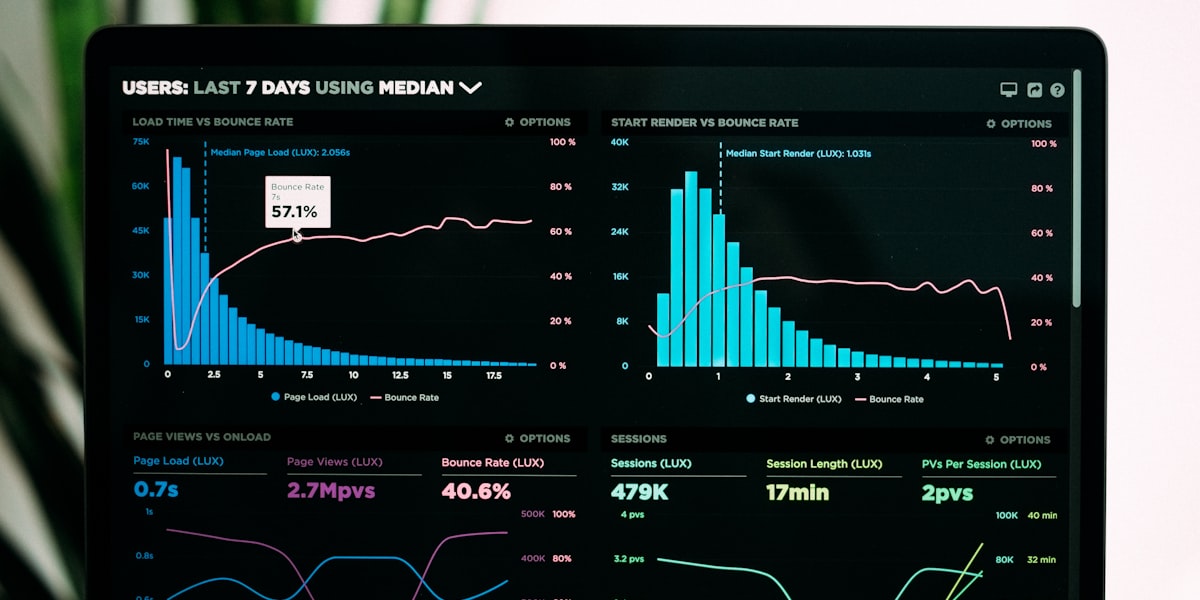
You don’t need to guess. Shopify Analytics, your payment processor dashboard, and your order data are enough to make a defensible decision. Here’s the framework.
Step 1: Pull Payment Method Usage Over 90 Days
In Shopify Admin, go to Analytics → Reports → Finances → Payments. Export payment totals and order counts by payment method for the last 90 days. Ninety days smooths out the noise from sales, holidays, and single-day anomalies.
Step 2: Calculate Per-Method Completion Rate
True completion rate requires joining two numbers — checkouts initiated with a method, and orders completed with that method. Shopify’s Abandoned Checkout report plus the Payments report gets you close. For each payment method:
Completion Rate = Orders Completed / Checkouts StartedIf you use Google Analytics 4 with enhanced ecommerce or a tool like Littledata, you’ll get cleaner per-method funnel data. If not, the Shopify-native numbers are directionally correct.
Step 3: Pull Refund and Chargeback Rates Per Method
From your payment processor dashboard (Shopify Payments, PayPal, Stripe, etc.), pull refund rate and chargeback rate broken down by payment method. A payment method that converts 4% better at checkout but carries a 3% higher refund rate is net neutral. Look for asymmetry.
Step 4: Segment by Device
On mobile, digital wallets should win decisively. On desktop, saved-card methods (Shop Pay, saved credit cards) often win. If your traffic skews heavily in one direction — and for most Shopify stores, mobile now accounts for 60–80% of sessions — optimize for that device first. You can even use conditional rules to reorder payment methods differently by device, but most stores should start with one universal order optimized for their dominant device.
Step 5: Segment by Country
This one matters if you sell internationally. Payment preferences vary enormously by market:
| Region | Typical Top Methods |
|---|---|
| United States | Shop Pay, Apple Pay, Credit Card, PayPal |
| United Kingdom | Shop Pay, Apple Pay, Credit Card, Klarna |
| Germany | Klarna, PayPal, SEPA, Credit Card |
| Netherlands | iDEAL, PayPal, Credit Card |
| France | Credit Card, PayPal, Apple Pay |
| Nordics | Klarna, Credit Card, MobilePay |
| India | UPI, Credit Card, COD |
| Brazil | Pix, Credit Card, Boleto |
| UAE / Middle East | Credit Card, COD, Apple Pay |
| Australia | Afterpay, Shop Pay, Credit Card |
Digital wallets now account for 83% of global digital payment volume — but which wallet dominates depends heavily on country. Customers trust what they know locally. A checkout that shows Apple Pay first in Germany is worse than one that shows Klarna first, because German customers expect Klarna. Country-specific payment ordering is one of the highest-leverage moves you can make if you sell cross-border.
Step 6: Rank and Decide
After steps one through five, you’ll have a ranked list of payment methods by true net conversion value. Usually the top slot is obvious once the data is in front of you. For a typical US-focused Shopify store doing strong mobile traffic, the answer is almost always Shop Pay or Apple Pay in the first position. For a German store, it’s almost always Klarna. For a COD-heavy Southeast Asian store, the answer may be a prepaid option first with COD moved down to reduce RTO risk.
Why Shopify’s Default Order Isn’t Good Enough
Shopify’s default algorithm does consider popularity, but it does so at a platform level, blended with customer-specific signals when available. That’s fine as a generic starting point. It is not optimized for your store, your product mix, your audience, or your margin structure.
Here’s what Shopify’s default doesn’t know:
- Which method carries the lowest chargeback rate in your product category
- Which method has the highest post-fulfillment retention rate for your customer base
- Which method produces the highest AOV for your products
- Which method your margin structure actually favors after processing fees
- What payment methods your customers in specific countries expect to see first
- Device-specific conversion patterns for your traffic mix
Every one of those factors is knowable with your own data. Once you know them, you can override the default and enforce the order that maximizes your revenue, not Shopify’s platform averages.

How to Reorder Payment Methods with Kedra Checkout Rules
Shopify’s Payment Customization Function API — the underlying system that lets apps reorder, rename, and hide payment methods — is available on every Shopify plan, not just Plus. But configuring it directly requires custom development. That’s where Kedra Checkout Rules comes in: a free Shopify app that gives you a no-code interface to Shopify’s native Payment Customization Functions, running server-side so the rules apply consistently across Shop Pay, Apple Pay, Google Pay, and standard checkout.
Here’s how to configure the highest-converting-first strategy step by step.
Step 1: Install Kedra Checkout Rules
Install the free app from the Shopify App Store. It installs in under a minute and does not require any theme edits.
Step 2: Create a Reorder Rule
Open the app and create a new Payment Method rule. Select the “Reorder” action.
Step 3: Set Your Priority Order
Drag your payment methods into the order your data says they should appear. For a typical US store, this might look like:
- Shop Pay (highest conversion on known returning customers)
- Apple Pay (strongest mobile conversion)
- Google Pay (second strongest mobile conversion)
- Credit/Debit Card
- PayPal
- Shop Pay Installments / Klarna / Affirm
- Any remaining methods
For an international store, you’d create country-specific versions of this list (see Step 5).
Step 4: Save and Test
Save the rule. Use a test mode or a private browsing session to verify the new order appears in checkout. Test on mobile and desktop, and test across all express checkout entry points (Shop Pay button on the cart, Apple Pay from the product page, etc.) to confirm consistent behavior.
Step 5: Add Country-Specific Logic (If You Sell Internationally)
If you ship to multiple countries, create additional rules scoped by shipping country. For example:
- Rule 1: If shipping country = Germany → show Klarna first, then PayPal, then Credit Card
- Rule 2: If shipping country = Netherlands → show iDEAL first, then PayPal, then Credit Card
- Rule 3: If shipping country = USA → show Shop Pay first, then Apple Pay, then Credit Card
- Rule 4 (default): For all other countries → standard international-friendly order
This dynamic, country-aware ordering is what makes the difference between a checkout that feels native and one that feels foreign. Customers trust what they recognize.
Step 6: Hide Underperforming Methods Where Appropriate
Reordering is the first win. The second win is hiding. If a payment method has low conversion, high chargeback risk, and produces orders that cost you money — for example, Cash on Delivery on orders over a certain value — the highest-converting configuration may be to hide that method entirely when specific conditions are met. Kedra Checkout Rules supports this with the same rule builder.
Common hide-rules that pair well with reordering:
- Hide COD when cart total > $500 (protects against high-value fraud)
- Hide COD for first-time customers (only show after verified purchase history)
- Hide PayPal on product categories with high dispute rates
- Hide BNPL on products under $50 (the installment math doesn’t help)
- Hide bank transfer on time-sensitive orders
Real-World Scenarios and What to Put First
Here are common store archetypes and the payment method ordering pattern that typically wins for each.
Scenario 1: US DTC Brand, Mobile-First, $40–$120 AOV
Mobile drives 75% of traffic. Shop Pay and Apple Pay combined account for 55% of completions. Credit card is about 30%. PayPal is 10%.
Recommended order: Shop Pay → Apple Pay → Google Pay → Credit Card → PayPal
Why: Mobile is the dominant device, wallets convert best on mobile, and Shop Pay’s saved-details advantage compounds with Apple Pay’s trust signal.
Scenario 2: Premium Furniture Store, $1,200 AOV, Desktop-Heavy
Desktop drives 60% of traffic. Customers are older and more likely to use credit cards. BNPL is relevant at this price point.
Recommended order: Credit Card → Shop Pay Installments → Affirm → Shop Pay → PayPal → Apple Pay
Why: Higher AOV buyers often want to feel in control of their information, especially for expensive purchases. BNPL moved up because it lifts AOV and conversion at this price point.
Scenario 3: German Apparel Store, Mid-Range Price Point
Germany skews heavily toward invoice-style payment methods. Klarna’s “Pay Later” is the dominant expectation.
Recommended order: Klarna → PayPal → SEPA Direct Debit → Credit Card → Apple Pay
Why: German consumers expect to see Klarna first. A checkout without it prominent is a checkout that feels foreign and loses conversion.
Scenario 4: High-Volume COD Store (India/Middle East)
COD is dominant but expensive — RTO (return to origin) rates are 15–30%. The goal is to push more customers to prepaid options without losing the ones who only buy COD.
Recommended order: UPI (or local wallet) → Credit/Debit Card → Apple Pay → COD (last, sometimes hidden above certain value)
Why: Putting prepaid options first shifts the default choice toward methods that retain revenue. COD stays available for customers who specifically need it, but position bias pushes more customers to prepaid.
Scenario 5: Cross-Border Store Selling to 20+ Countries
Country-conditional rules. One order for US, one for UK, one for Germany, one for Netherlands, one for France, one for Australia, and a smart default for everything else.
Why: Each market has its own dominant method. Trying to force one global order into every market loses conversion in every market except the one you optimized for.
The Conversion Math: Why This Actually Moves Revenue
Take a Shopify store doing $100,000/month in revenue, with 70.22% cart abandonment (the Baymard 2026 average). That’s roughly 30% of checkouts completing today.
If reordering payment methods lifts checkout completion by even 2 percentage points — conservative based on what stores have reported after switching their dominant method into the first slot — that translates to:
- ~6.7% increase in completed orders (2 points on a 30% base)
- ~$6,700/month in additional revenue
- ~$80,400/year in additional revenue
Many stores see more than 2 points of lift, particularly when they combine reordering with country-specific logic. And because the change has no incremental cost — no ad spend, no product changes, no development — the ROI is effectively infinite.
On the downside, the cost of not optimizing compounds quietly. Every week you run with the default order, the customers who would have converted at a higher rate on a different method are just… converting at a lower rate. You never see the lost revenue because you never had a baseline. It’s the most invisible form of leakage in ecommerce.
How to A/B Test Payment Method Order Safely
If you’re nervous about a wholesale change, you can validate the ordering before committing. Kedra Checkout Rules doesn’t natively run A/B splits, but you can approximate one:
Option 1: Time-Based Testing
Run the new order for two weeks, then revert for two weeks, then compare. This is the blunt approach and works well for high-volume stores. For lower-volume stores, seasonal and day-of-week variance can muddy the result.
Option 2: Country-Based Testing
Roll out the new order in one country first. Measure checkout completion rate for that country before and after. Compare against countries still running the default. This isolates payment method order from other variables like promotions or traffic mix.
Option 3: Traffic-Segment Testing
Some stores use customer tags or URL parameters to run experiments. Apply the new rule to customers with a specific segment tag, and leave the default for everyone else. This works if your store already segments traffic by campaign.
What to Measure
The headline metric is checkout completion rate. But also watch:
- Revenue per session (the real outcome)
- AOV by payment method (did BNPL usage change?)
- Refund and chargeback rate over 30 days (did order quality change?)
- Time-to-checkout (did customers move faster?)
If completion rate lifts and refund/chargeback rates hold, you’re winning. Keep the new order.
Common Mistakes to Avoid
Mistake 1: Putting the Most Profitable Method First Instead of the Highest-Converting
It’s tempting to put the payment method with the best fees at the top. But if customers don’t pick it, the margin savings don’t apply. Optimize for the method that customers will actually choose and complete — then hide or deprioritize methods that hurt margin separately.
Mistake 2: Copying Another Store’s Order
The highest-converting method for your store depends on your traffic, your country mix, your product category, and your AOV. A fashion brand’s winning order is not a furniture brand’s winning order. Use your own data.
Mistake 3: Ignoring Country Differences
If more than 10% of your traffic comes from outside your primary country, you’re leaving money on the table by not having country-specific rules. The effort is small; the return is large.
Mistake 4: Changing Order Without Measuring
Make the change, then measure. If you don’t baseline completion rate before the switch, you won’t know whether it worked, and you’ll end up flip-flopping based on feel. Write down the baseline before you touch anything.
Mistake 5: Forgetting Express Checkout Flows
Apple Pay on the product page, Shop Pay on the cart, Google Pay in the mini-cart — these all bypass the main checkout payment list. Reordering the main checkout doesn’t change them. You may still want to reorder or toggle visibility of those buttons via theme settings, but that’s a separate lever.
Frequently Asked Questions
Does reordering payment methods violate Shopify’s rules?
No. Shopify explicitly provides the Payment Customization Function API for exactly this purpose. Apps like Kedra Checkout Rules use this official API to reorder, rename, or hide payment methods.
Will my highest-converting payment method change over time?
Probably. As digital wallet adoption grows, the winning method shifts. Re-evaluate every 3–6 months. In particular, Apple Pay and Shop Pay have been climbing steadily, and BNPL options have meaningful category-specific shifts.
Can I reorder express checkout buttons too?
Some express buttons (Shop Pay, Apple Pay, Google Pay) appear on the cart and product pages via theme settings. Theme-level changes handle those. Kedra Checkout Rules handles the payment list that appears inside the main checkout page.
Does this work on Shopify Plus and non-Plus stores?
Yes. Shopify’s Payment Customization Functions are available on all plans. Kedra Checkout Rules works on every plan, free of charge.
Will reordering slow down my checkout?
No. Shopify Functions run server-side and add negligible latency — well under 100ms. Customers won’t notice any performance difference.
What if I don’t know which method is my highest-converting?
Start with a defensible hypothesis based on industry data (for US mobile-heavy stores, Shop Pay or Apple Pay; for German stores, Klarna; etc.), then measure for 30–60 days before iterating. Something optimized is better than something defaulted.
Can I reorder differently for different products or customer segments?
Yes. Kedra Checkout Rules supports conditional payment ordering based on cart contents, customer tags, cart value, shipping country, and more. Wholesale customers might see invoice-first ordering; retail customers see wallet-first.
How often should I revisit payment method ordering?
Quarterly at minimum. Payment method adoption shifts continuously — Shop Pay grew significantly over the last two years, BNPL adoption is still climbing in some markets and plateauing in others, and country-specific wallet preferences keep evolving. Build it into your CRO review cadence.
Start With the Highest-Impact Change
Payment method ordering is one of the highest-ROI changes you can make to a Shopify checkout. It doesn’t require new traffic, new products, new pricing, or new copy. It requires you to look at your own data, identify the method that actually converts best for your customers, and put it in the position where it will be seen and chosen first.
The technical lift is minimal — Kedra Checkout Rules handles the server-side implementation through Shopify’s native Payment Customization Functions. The measurement lift is small if you have basic analytics in place. And the revenue lift is consistent enough that virtually every store that has tried this has seen incremental orders.
If you’ve been running the Shopify default payment order since you launched your store, it is almost certainly not optimized for your customer base. Pull the data this week. Pick the winner. Put it first. Your checkout will start converting better by the next order that comes through.
Kedra Team
Expert insights on Shopify development and e-commerce growth strategies.