A small Shopify store can earn ChatGPT citations, but no honest guide can promise how many or how fast. The reliable approach is to run your own case study: record a baseline, fix crawl access and product data, publish answer-ready pages, then measure ChatGPT citations, AI referral traffic and AI orders every month for six months.
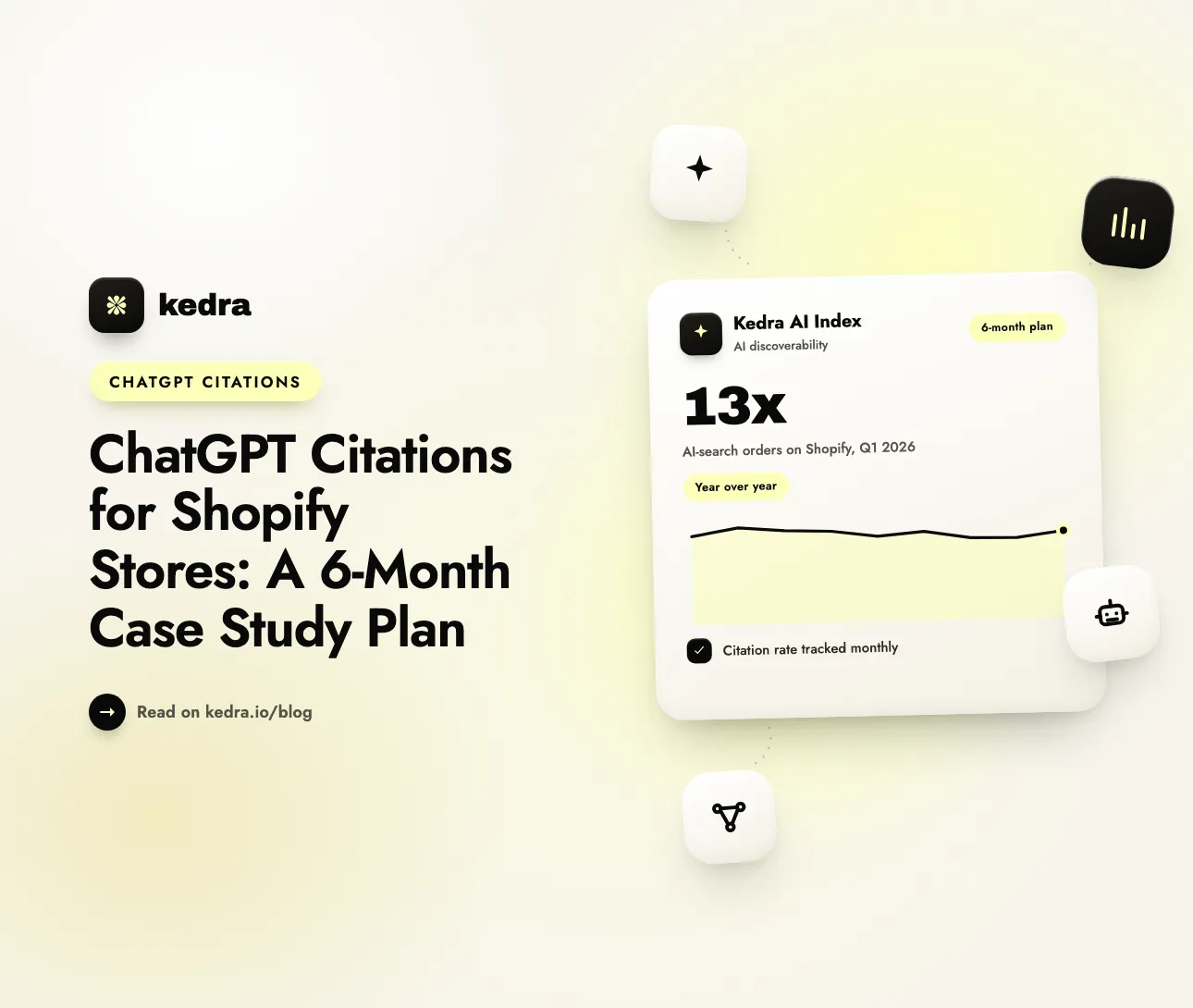
The stakes are growing fast. On Shopify’s Q1 2026 earnings call, AI-driven traffic to Shopify stores was up 8x year over year, and orders from AI-powered searches were up nearly 13x (PYMNTS, May 5, 2026). The absolute numbers are still small. A Marketing Science study by Maximilian Kaiser and Christian Schulze of 973 e-commerce sites found that LLM traffic was under 0.2% of total traffic between August 2024 and July 2025. The same study found that ChatGPT’s conversion rate kept rising over the period. A six-month case study shows whether that channel is growing for your store, using your own data instead of someone else’s claims.

On this page
- What counts as a ChatGPT citation?
- Why do most ChatGPT case studies fall apart?
- How do you set a baseline before month one?
- What should you fix in months one and two?
- What happens in months three to six?
- The 6-month plan at a glance
- How do you measure AI traffic and orders on Shopify?
- How Kedra AI Index runs the measurement for you
- Frequently Asked Questions
What counts as a ChatGPT citation?
A ChatGPT citation is a link to one of your pages shown as a source in a ChatGPT answer. A citation differs from a mention, which is ChatGPT naming your brand or product with or without a link. A case study needs to track both, plus the visits and orders those answers send, because each one tells you something different.
| Metric | What it is | Where you see it |
|---|---|---|
| Mention | ChatGPT names your brand or product in an answer | Only by asking ChatGPT, or with a tracking tool |
| Citation | ChatGPT links one of your URLs as a source | Only by asking ChatGPT, or with a tracking tool |
| Citation rate | Share of repeated runs of a fixed question set where your domain is cited | Your tracking sheet or tool |
| AI referral session | A visit that arrives from chatgpt.com or another AI assistant | Shopify Analytics, GA4 |
| AI order | An order whose session started from an AI assistant | Shopify Analytics, attribution apps |
Mentions build awareness, and citations send traffic. A store can be mentioned often and never cited, which usually means ChatGPT knows the brand from other sites (reviews, Reddit threads, roundups) but cannot find or trust a page on the store itself. The reverse also happens: a well-structured shipping or size guide gets cited for a narrow question without the brand ever being recommended.
ChatGPT gets this information in two ways. Training data is collected months before a model ships. ChatGPT search fetches live pages when a shopper asks a question. OpenAI’s crawler documentation says sites that block OAI-SearchBot “will not be shown in ChatGPT search answers.” Live search is the part a store can influence within six months, so this plan focuses on it.
Not sure where you start? Check my store’s AI visibility for free. The free AI Visibility Checker scans crawler access, structured data and commerce readiness in about 60 seconds and returns a 0-100 score, with no login.
Why do most ChatGPT case studies fall apart?
Most published ChatGPT case studies rely on a few screenshots of single answers, and single answers prove almost nothing because AI recommendations change from one run to the next. A screenshot shows that a brand appeared once, not that it appears reliably.
The clearest evidence comes from a January 2026 study by Rand Fishkin of SparkToro and Patrick O’Donnell of Gumshoe. Volunteers ran 12 brand-recommendation prompts dozens of times each across ChatGPT, Claude and Google’s AI search features. The finding: “AIs rarely give the same list of brands or recommendations twice (<1 in 100 times, no matter the question).” Fishkin was just as blunt about how to measure: “visibility % across dozens to hundreds of prompts run multiple times is a reasonable metric,” while “any tool that gives a ‘ranking position in AI’ is full of baloney.” The study is not peer-reviewed, and Gumshoe sells AI tracking, but the raw data is public.
Published case studies also tend to share three other weaknesses:
- No baseline. Without a “before” number, “featured in 50 answers” has no meaning.
- Tiny samples. A jump from 4 to 9 citations looks like +125% but may be noise.
- Changes nobody controlled. Google ranking shifts, seasonality, a new ChatGPT model or a viral Reddit thread can move results more than any fix you made.
That is why this guide gives you a plan instead of a story. A store that measures the same questions the same way for six months ends up with a case study it can trust, and the same data shows which fixes are worth repeating.
How do you set a baseline before month one?
A baseline is a snapshot of your store’s AI visibility, traffic and orders, taken before you change anything, so that every later result has something to compare against. Spend the first week on it and do not skip it.
- Write 20-30 buyer questions. Use the words shoppers type, not your product names: “best merino base layer for hiking,” “vegan leather tote under $150,” “sunscreen safe for reef swimming.” Mix category, problem and comparison questions, plus a few branded ones (“is [your brand] legit”).
- Run each question several times in ChatGPT with search turned on, logged out or in a clean session. Record whether your brand is mentioned, whether your domain is cited, and which competitors and sites appear instead.
- Calculate your starting citation rate and mention rate: the share of runs that mention or cite you. Zero is a valid and common baseline.
- Export 90 days of traffic and orders by referrer from Shopify Analytics, so you know your current AI sessions and orders.
- Check crawler access. Open
yourstore.com/robots.txtand run the free GPTBot and AI crawler checker to confirm OAI-SearchBot gets a normal response. - Verify your store in Bing Webmaster Tools. Its AI Performance report, launched in public preview on February 10, 2026, shows total citations, cited pages and grounding queries across Microsoft Copilot and Bing’s AI summaries.
- Write down everything else going on: planned sales, new launches, ad spend changes. These are the confounders you will need later.
Keep the question list fixed for the full six months. Adding questions is fine, but report them separately, or the citation rate will rise only because the questions got easier.
What should you fix in months one and two?
Months one and two are for technical fixes that decide whether ChatGPT can find, read and trust your pages at all. These fixes are cheap, and none of the content work later pays off without them. Work through them in this order and log the date of each change:
- Crawler access. Remove any
robots.txt.liquidrule, CDN setting or bot-protection app that blocks OAI-SearchBot. A store behind Cloudflare can serve a clean robots.txt and still return 403 errors to AI crawlers. - Server-rendered product content. Open a product page’s source and confirm the description, price and reviews are in the HTML, not injected later by JavaScript.
- Product structured data. Make sure every product page outputs
ProductJSON-LD withname,brand,offers,priceandavailability. The free Product Schema Checker shows which fields are missing. - A store-specific llms.txt. Shopify serves a generic
/llms.txtthat describes the platform, not your shop. Our llms.txt guide for Shopify explains what to put in a store-specific version, and why it is a low-cost signal rather than a guarantee. - Sitemap in Bing. Submit
yourstore.com/sitemap.xmlto Bing Webmaster Tools, because ChatGPT search draws on third-party search providers.
For the full checklist with tests for each item, see the 7 technical signals that tell ChatGPT your store exists. Re-run your question set at the end of month two. Do not expect a big jump yet. The goal of months one and two is to remove blockers, not to win citations.
What happens in months three to six?
Months three to six are for giving ChatGPT pages worth citing and reasons to trust your brand, then measuring the result every month. Technical fixes make your store readable. Content and reputation make it citable.
Start with the questions where competitors or third-party sites were cited instead of you in your baseline. For each one, look at what the cited page does that yours does not. Usually it gives a direct answer in the first paragraph, states specific facts (materials, sizes, shipping times, prices) and is organized around the question rather than the product. Then build or rewrite one page per question:
- Buying guides and comparisons for category questions (“merino vs synthetic base layers”).
- Policy pages written as answers: shipping times by country, returns window, warranty terms, in plain sentences.
- Product pages with a short answer block above the fold: what it is, who it is for, what makes it different.
- Visible FAQ sections that use the shopper’s phrasing.
In parallel, work on mentions outside your store. ChatGPT search draws on third-party search results, so pages that already rank and get discussed elsewhere are easier to cite. Ask happy customers for reviews on independent platforms, pitch your products to genuine roundup authors, and answer questions in the communities your buyers use, without spamming them. Our guide to how AI models decide which brand to recommend covers these trust signals in more depth.
Measure on the same day each month, with the same question set and the same number of runs per question. Log citation rate, mention rate, AI sessions and AI orders, and note what changed that month. By month six you have a dated timeline of fixes next to a dated timeline of results. That is what makes it a real case study.
The 6-month plan at a glance
| Month | Focus | What to measure | Done when |
|---|---|---|---|
| 0 (week 1) | Baseline | Citation rate, mention rate, AI sessions and orders, crawler access | 20-30 questions logged, 90-day referrer export saved |
| 1 | Access and rendering | OAI-SearchBot response, HTML content check | No blocked AI search crawlers; key content in page source |
| 2 | Structured data and AI files | Schema errors, llms.txt content, Bing indexing | Product schema complete; store-specific llms.txt live |
| 3 | Answer pages | Citation rate on targeted questions | One answer-first page per losing question |
| 4 | Off-site trust | New reviews, roundup and community mentions | Brand discussed on sites ChatGPT already cites |
| 5 | Refresh and expand | Citation rate, AI sessions | Weak pages rewritten; new questions added (tracked separately) |
| 6 | Write-up | Change from baseline on every metric | Results compared against baseline, with confounders listed |
How do you measure AI traffic and orders on Shopify?
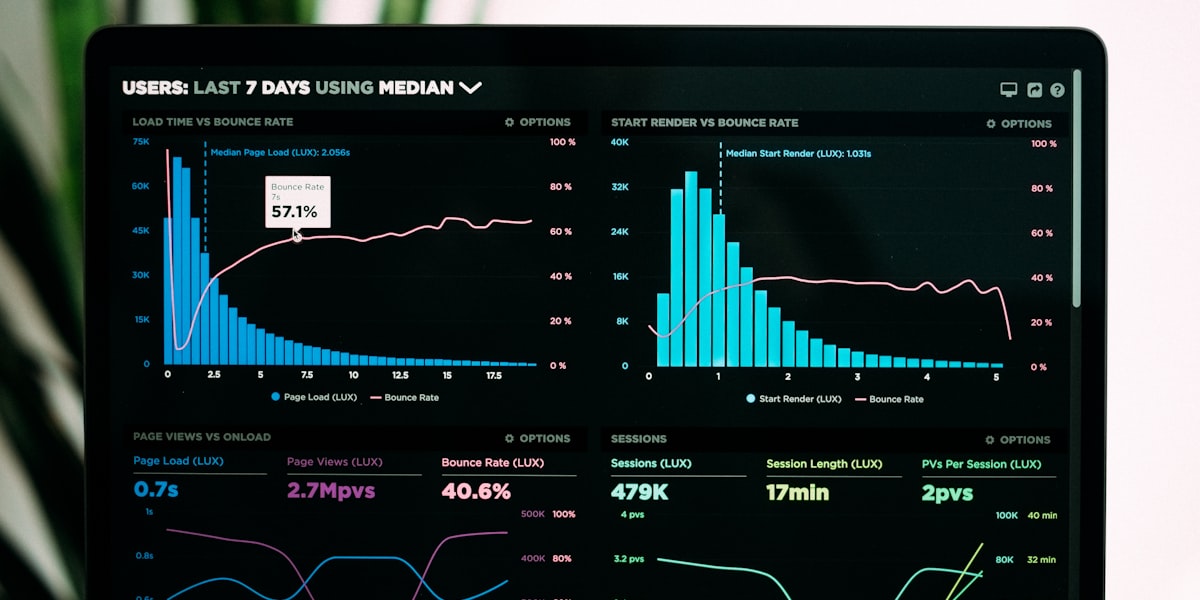
Shopify records AI-referred visits like any other referral, so you can find them by filtering sessions and orders by referrer for AI domains such as chatgpt.com, perplexity.ai, gemini.google.com, claude.ai and copilot.microsoft.com. In Shopify admin, go to Analytics > Reports and open a sessions report broken down by referrer, then compare the same months for orders.
Three caveats keep the numbers honest:
- AI traffic is undercounted. ChatGPT often adds
utm_source=chatgpt.comto the links it cites, but not always. Seer Interactive’s analytics guide, updated June 22, 2026, warns that “when ChatGPT links don’t include UTM parameters or referral data, traffic will likely appear as ‘Direct’ in GA4.” Treat AI referral numbers as a floor, not a total. - Small numbers swing hard. Going from 3 to 9 AI orders is a 200% increase and may still be noise. Report counts next to percentages.
- Compare against your own channels. In the Kaiser and Schulze study, ChatGPT’s conversion rate and revenue per session were higher than paid social but lower than the other established channels. The authors found ChatGPT adds the most value for complex, information-intensive purchases. As Schulze put it: “For simple purchase decisions, its value is currently limited.” A store selling considered purchases is more likely to see the channel pay off than a store selling simple, low-cost items.
For indexation, the Bing AI Performance report is the closest thing to first-party citation data available today. It covers Microsoft’s AI surfaces, not ChatGPT, but it shows which of your pages AI systems retrieve and for which grounding queries. If you already have an AI visibility score, our AI visibility score benchmarks help you read it alongside these numbers.
How Kedra AI Index runs the measurement for you
Kedra AI Index automates the tracking side of this case study and handles several of the month-two fixes, so the six months go into content and results instead of spreadsheets. Running 30 questions dozens of times a month by hand is the step most merchants abandon.
Here is how the app maps to the plan:
- Baseline and monthly tracking. Kedra AI Index asks the buyer questions you choose across six AI engines (ChatGPT, Gemini, Perplexity, Google AI Overviews, Google AI Mode and Claude). It records whether your brand is mentioned, which competitors appear and which URLs each answer cites. Tracking over time gives you the frequency-based visibility metric the SparkToro study recommends, instead of a single “rank.”
- AI traffic and orders. The app attributes storefront sessions and orders to the AI assistant that referred them, using referrer hosts and AI UTM tags, so AI revenue does not disappear into “Direct” as easily.
- Crawler activity. An AI crawler log shows which AI crawlers (GPTBot, ClaudeBot, PerplexityBot and others) visit your store, and the readiness check flags robots.txt rules that block them.
- Store-specific AI files. Kedra AI Index replaces Shopify’s generic llms.txt and agents.md with files written about your products, collections, policies, shipping and returns, and keeps them refreshed.
- Drafted fixes. The app drafts fixes such as alt text, product descriptions and meta titles for you to approve.
Kedra AI Index has a free plan that includes one full AI visibility snapshot across all six engines, which works as your month-zero baseline. Paid plans start at $10/month and re-check on a schedule, so your monthly measurement runs without manual work.
Ready to start your own case study? Install Kedra AI Index from the Shopify App Store and take your baseline snapshot today.
Frequently Asked Questions
How long does it take for ChatGPT to cite a Shopify store?
There is no fixed timeline. OpenAI says robots.txt changes can take about 24 hours to reach its search systems, but earning citations depends on whether your pages answer buyer questions better than the pages ChatGPT already cites. Plan for at least three to six months of fixes and content, and measure monthly against a baseline.
How many buyer questions should a case study track?
Track 20-30 questions for a small store, a mix of category, problem, comparison and branded queries. Run each question several times per check, because AI answers change between runs. Keep the original list fixed for six months, and report any questions you add later separately, so the citation rate stays comparable over time.
Is a ChatGPT mention without a link worth anything?
Yes. A mention without a link still puts your brand in front of a shopper at the moment of decision, and some shoppers search for the brand afterwards. Those visits show up as branded search or direct traffic rather than AI referrals. Track mentions and citations separately, because the two can move independently from month to month.
Why does ChatGPT cite other sites instead of my store?
ChatGPT cites the pages that answer the question most directly and that its search sources can find and trust. Review sites, marketplaces and forums often win because they compare options and get discussed widely. Your store wins citations with answer-first pages, complete product data, open crawler access and genuine mentions on other sites.
Do I need a paid tool to run a ChatGPT case study?
No. A spreadsheet, a fixed question list and Shopify Analytics are enough to start. The hard part is volume: reliable citation rates need many repeated runs across several AI engines every month. A tracking tool such as Kedra AI Index automates those runs and the AI order attribution, which is where most manual case studies stall.
Start your ChatGPT case study this week
A trustworthy ChatGPT case study needs four things: a fixed question list, a recorded baseline, dated fixes and monthly measurement. Months one and two remove technical blockers, months three to six build pages worth citing and mentions worth trusting, and the result is a six-month record of what actually moved your citations, traffic and orders.
Take your first step now: scan my store’s AI visibility for free to see where you start. Then install Kedra AI Index to track ChatGPT citations and AI orders every month until your own case study is ready to publish.