If your Shopify content has been stolen, act fast in a fixed order: document the theft with screenshots and URLs, file a DMCA takedown with the copycat’s host and platform, submit a Google removal request to de-index the clone, then monitor for repeats and harden your store so it can’t happen again.
Content theft is the unauthorized copying of your store’s product images, descriptions, or branding for use somewhere else — and post-breach recovery is the ordered process of getting that content removed at the source, de-indexed from search, and prevented from recurring. The threat is not rare. For the first time in a decade, automated traffic surpassed human activity online, accounting for 51% of all web traffic — with bad bots alone making up 37% — according to Imperva’s 2025 Bad Bot Report. A large share of that automation exists to scrape and republish the exact commercial content you paid to create. Speed matters: the faster you document and file, the less time a clone has to outrank you or scam your customers.
In this guide:
- First 24 hours: capture the evidence
- File a DMCA takedown at the source
- Remove the clone from Google Search
- Report marketplace and ad copies
- Monitor for future theft
- Prevent it from happening again
- Frequently asked questions
What should I do the first 24 hours after content is stolen?
In the first 24 hours, your job is evidence, not emotion: capture proof before the copycat can edit or delete it. Screenshot the infringing pages, save the exact URLs, and record the dates — this documentation is what makes every takedown below succeed.
Work through these five steps in order:
- Screenshot everything. Take full-page captures of the infringing pages showing your stolen images and text, ideally side by side with your originals. Make sure the visible URL and the date are in frame.
- Save the exact URLs. Record the specific infringing URLs — product pages, direct image files, ad links — not just the homepage. Takedown forms ask for precise locations.
- Prove you’re the original. Locate your first-publish evidence: the Shopify product “created” date, your image upload or EXIF dates, your blog
pubDate, and archived snapshots from the Wayback Machine. Priority in time is your strongest argument. - Identify the host and platform. Run a WHOIS lookup on the copycat’s domain and check whether the clone runs on Shopify, WooCommerce, a marketplace, or a standalone host. This determines where you file.
- Don’t tip them off. Resist sending an angry email first. A warned thief deletes evidence and re-hosts under a new name. File formal notices instead — they carry legal weight and create a record.
While you handle removal, close the door the scraper walked through. Kedra Shield blocks the bots, VPNs, and casual copiers that harvest storefront content in the first place.
How do I file a DMCA takedown against a store that copied me?
File a DMCA takedown notice with the copycat’s web host and the platform hosting the content; it legally compels a U.S.-based service provider to remove infringing material. The notice must identify your work, list the infringing URLs, include your contact details, and carry good-faith and accuracy statements under penalty of perjury.
The notice-and-takedown system lives in Section 512 of U.S. copyright law. As the U.S. Copyright Office explains, “Section 512 contains limitations on liability — referred to as safe harbors — for four types of online service providers.” That safe harbor is precisely why hosts act on valid notices quickly: ignoring them puts their own liability at risk.
Where you send the notice depends on where the clone lives:
- If the clone is on Shopify: use Shopify’s official copyright infringement report form. Per Shopify’s copyright policy, when it receives a valid notice Shopify “will generally remove the reported content from its platform and will inform the affected merchant via their Shopify admin.” The store owner can file a counter-notice; if they do and you don’t notify Shopify of a lawsuit, the disputed content “may be reposted” after a 10–14 business day window.
- If the clone is on another host: send the notice to that host’s designated DMCA agent, found via WHOIS or the host’s abuse/legal page. Red Points’ 2026 Shopify DMCA guide notes takedowns can take days to weeks and infringers sometimes re-post under new accounts — so pair the host notice with the Google and monitoring steps below.
A valid DMCA notice under 17 U.S.C. § 512(c)(3) must include six elements:
- Your physical or electronic signature, as the owner or an authorized agent.
- Identification of the copyrighted work you own.
- Identification of the infringing material, with its specific URL(s).
- Your contact information (name, address, email).
- A statement of your good-faith belief that the use is unauthorized.
- A statement, under penalty of perjury, that the information is accurate and you are authorized to act.
Where to file each takedown (and what it actually removes)
Different routes remove different things. File the ones that apply in parallel — they reinforce each other.
| Route | Where to file | What it removes | Typical timeline |
|---|---|---|---|
| Web host / Shopify | Host’s DMCA agent or Shopify’s report form | The infringing page at the source | Days to weeks |
| Google Search | Google’s legal removal tool | The link from Google results (not the source) | Days to a few weeks |
| Meta (Facebook/Instagram) | Meta IP reporting form | The infringing ad or post | Hours to days |
| Amazon / Etsy / eBay | Marketplace IP or Brand Registry complaint | The infringing listing | Days |
How do I remove stolen content from Google search results?
Submit a copyright removal request through Google’s legal tools to de-index the infringing URLs. Important: this removes the clone’s link from Google Search results — it does not delete the content from the copycat’s website — so always file the host DMCA in parallel.
Use Google’s Report content for legal reasons troubleshooter and provide the infringing URLs, the URL of your original work, and a signed good-faith statement. Google typically responds within days to a few weeks, and high-volume rights holders can apply to its Trusted Copyright Removal Program. If the clone also ranks in Bing, file Bing’s equivalent copyright request.
De-indexing protects your rankings for a concrete reason: when two pages share the same text, Google keeps one version as canonical and suppresses the other. If the thief’s page is winning that contest, removing it from search restores the visibility you should have had. This is the same mechanism that lets scraped copy quietly erode your traffic — see exactly how scrapers lift product descriptions and what it does to your SEO.
Where do I report a copycat on a marketplace or running ads?
If the copycat sells on a marketplace or advertises your creative, report through that platform’s intellectual-property channel — each has a dedicated form that is usually faster than a host-level DMCA. Platform IP teams remove infringing listings and ads without waiting on the thief’s web host.
- Meta (Facebook/Instagram ads): report through Meta’s IP reporting form or Brand Rights Protection. Stolen ad creative often comes down within hours to days.
- Amazon, Etsy, eBay: file the marketplace’s IP complaint or use its Brand Registry. A registered trademark dramatically speeds and strengthens these takedowns.
- Google and YouTube ads: submit a trademark or copyright complaint through Google Ads policy channels.
- Payment and domain layer: if it’s a fraud clone collecting real payments, also report it to the payment processor and the domain registrar — this can freeze the operation faster than content removal alone.
One recurring lesson: a registered trademark unlocks the fastest, most durable takedowns across marketplace brand registries and ad-platform brand protection. If you don’t have one, registering your brand name and logo is one of the highest-leverage moves for preventing the next incident.
How do I monitor for content theft going forward?
Set up ongoing monitoring so you catch the next clone in days, not months. Reverse-image search, plagiarism checks, and brand alerts turn recovery from a fire drill into a routine you run in minutes.
- Reverse-image search your hero photos with Google Images and TinEye to find where your product photography has been reposted.
- Run key descriptions through a plagiarism checker (such as Copyscape) to surface copied text across the web.
- Set Google Alerts for your brand name, distinctive product names, and any signature taglines.
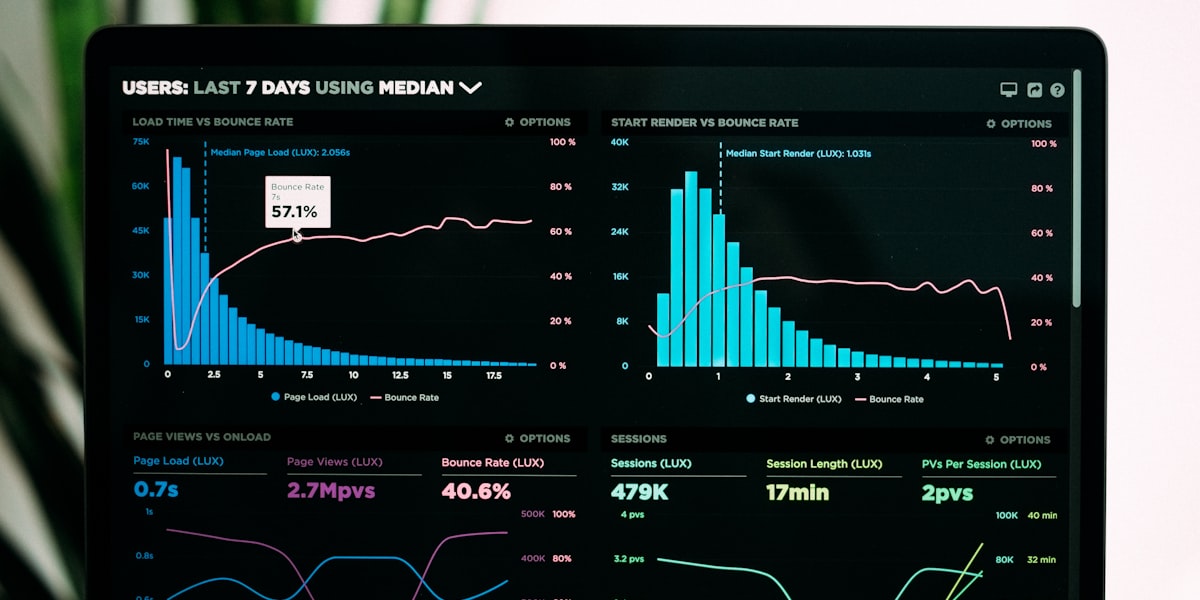
- Watch your analytics for referral spikes from unfamiliar domains and sudden ranking drops on pages with unique copy — both are early theft signals. Bot-driven scraping also pollutes your analytics, so clean data is a side benefit of protection.
- Check ad libraries monthly — the Meta Ad Library will show your images if a competitor is running them as paid creative.
- Keep a takedown template ready. Pre-fill the DMCA elements above so filing the next notice takes minutes, not an afternoon.
How do I stop my Shopify content from being stolen again?
The most reliable recovery step is prevention: make your storefront expensive to scrape and hard to copy. Blocking automated traffic at the perimeter and disabling casual copy tools removes the two easiest theft methods entirely, which is where the vast majority of content lifting happens.
Kedra Shield is built for exactly this — layered protection that closes the doors copycats use:
- Bot, VPN/proxy, and IP/country/city blocking cuts off the automated scrapers and anonymized traffic that harvest your catalog at scale, before a single page loads.
- Image protection and disabled downloads stop the “Save Image As” and drag-and-drop grabs that lift product photography.
- Right-click, copy-paste, and keyboard-shortcut blocking deters casual competitors copying your descriptions by hand.
- Developer-tools detection frustrates the more technical thief digging for full-resolution image URLs and theme source.
- Content blur on inactivity plus blocked-visitor analytics adds a session-level layer and shows you who’s being blocked so you can tune rules.
You can start on the free plan — image and content protection, IP and country blocking, and disabling right-click, copy-paste, and dev tools — and upgrade for unlimited VPN/proxy blocking and city/ISP rules from $7.99/month. Be realistic about the ceiling: no client-side protection is absolute, and determined scrapers are only truly stopped at the network layer. That’s exactly why combining bot and IP filtering with UI protection matters, rather than relying on any single trick.
Install Kedra Shield and turn your store from an easy target into a hard one.
For the full picture of what unprotected theft actually costs — in SEO, chargebacks, and brand damage — read the real stories of content theft.
Frequently Asked Questions
Is a DMCA takedown free to file?
Yes. Filing a DMCA notice with a web host, with Shopify, or with Google costs nothing — you submit it yourself through their official forms. Costs only appear if you escalate to a lawyer for a cease-and-desist letter or a lawsuit, which is usually unnecessary when hosts and search engines honor valid notices within days.
Can I file a DMCA if my content isn’t formally registered?
Yes. In the U.S., original work is protected by copyright automatically the moment you create it, so registration isn’t required to send a DMCA notice. Registration does add legal weight if you ever sue, and a registered trademark speeds marketplace and ad-platform takedowns, so both are worth pursuing for serious brands.
How long does it take to get stolen content removed?
It varies by route. Marketplace and ad-platform reports often resolve in hours to days; host-level DMCA takedowns take days to a few weeks; and Google de-indexing typically lands within days to a few weeks. Filing every relevant route in parallel — host, search engine, and platform — is the fastest path to full removal.
What if the copycat is based overseas?
You can still file. Shopify and Google accept infringement reports from and about rights holders worldwide, and platform takedowns don’t depend on the thief’s country. Enforcement is hardest against standalone foreign hosts, so de-indexing the clone from Google and reporting its ads often achieves more than chasing an unresponsive host.
Does disabling right-click actually stop content theft?
Not completely, but it stops the majority. Right-click, copy-paste, and drag-and-drop blocking deter the casual competitors and manual copiers who account for most content lifting. Determined, automated scrapers need network-level bot and IP blocking too, which is why layered tools like Kedra Shield combine both instead of relying on one.
Turn a breach into a one-time event
Content theft feels like a violation, but it’s a solvable problem with a fixed playbook: document the evidence, file DMCA takedowns at the source, de-index the clone from Google, report marketplace and ad copies, monitor continuously, and prevent recurrence. Run those steps in order and most stolen content is gone within weeks — and the copycat loses the search visibility it was stealing from you.
The last step is the one that ends the cycle. Install Kedra Shield to block the bots and casual copiers at the source, or explore all of Kedra’s Shopify apps to protect your store end to end.
Kedra Team
Expert insights on Shopify development and e-commerce growth strategies.